Unchained Music Blog

Unchained Music Blog

Monday, November 13, 2017

Nick Black - Summer + Spring (2017)


Written by Laura Dodero, posted by blog admin

The third release from twenty eight year old Nick Black, Summer + Spring, is easily the most complete recording yet from a young musician and singer that has amassed more and more of a reputation as one of R&B, soul, and funk’s foremost practitioners working today. These aren’t songs devoted solely to just having a good time, but they do have an upbeat sound even at their most serious and largely concern themselves, subject-wise, with self reflection and interpersonal relationships. He’s grown enough as a performer and songwriter that he’s comfortable incorporating comedic tracks alongside the more serious numbers, but he never loses sight of musical excellence even when his point of view is less than serious. He’s logged a lot of miles and sparked audiences across the country since his 2012 debut and the passion he brings to bear for what he does distinguishes him from the pack.

He comes leaping out of his corner swinging with the first song “Joy to the Girl”. The not so subtle play on a popular phrase works wonders for this charming and very funky track and Black spices it up even more with a supple vocal and flashes of the guitar brilliance he brings to every project. His guitar playing is held in check on the album’s title song “Summer & Spring”, but it has a noticeable effect thanks to the crackling fills it drops into the mix and how much chemistry it strikes up with the rhythm and brass sections. While some songs are obviously better than others, I never hear anything else than full on chemistry stamped on each of the album’s thirteen tracks and few songs illustrate that better than the laugher “Nick at Night”. Once again, Black plays off a phrase common in the culture and makes it his own, but there are layers to this comedic romp as a close listen to the lyric gives listeners a chance to form more than one interpretation. “Runaway Heart” is, arguably, the closest that Summer + Spring comes to an outright blues, but there’s a commercial side to this song as well that primes it for radio play. Despite his allegiance to styles that have long fallen out of commercial favor, Black’s songs are crafted with an obvious desire to appeal to a much wider audience than genre buffs and he’s successful in this regard.

“Neighbor” is likely the nearest that Black comes to manifesting an outright rock sound and pairs up quite powerfully with its funked out follow up “When the Morning Comes”. Black cuts loose on the latter song with stinging lead work and an unerring sense of rhythm that gives the song some added internal propulsion. “Dance in the Light” has some of the same funk influences, but they are tempered some and much more stylized than on the aforementioned cut. Summer and Spring ends with the one two punch of “Outside of You” and “The River” – two tunes that could scarcely be more different. The former is a confidently striding soul rave up with just the right amount of force employed to make an impression while the closer concludes things on an acoustic blues note and contains Black’s most soulful vocal on the release. It’s quite an album for this young performer and undoubtedly his best yet.

Sunday, November 5, 2017

YYY - A Tribute to the Beach Boys' Pet Sounds (2017)


Written by Daniel Boyer, posted by blog admin

YYY’s A Tribute to the Beach Boys’ Pet Sounds revisits a seminal album release that, by 2017, should be considered every bit as canonical to our culture as Christmas classics and other iconic works from the first and second generation of modern musical and rock performers. The powerful imaginative hold exerted by this classic crosses generations – young Minneapolis musician Austin Carson, aka YYY, has set the bar high for himself with this audacious musical endeavor and the bevy of local performers he drafts as guest stars makes the case, however inadvertently, that the Minneapolis area remains a key hub for original American music in 2017. These covers are far from slavish imitation; instead, YYY aims at nothing less than fully re-envisioning Brian Wilson’s classic compositions for a modern audience. It sounds like hubris. The thrilling part is that it turns out to be anything but hubris because YYY pulls it off so compellingly.

He begins the album with “Wouldn’t It Be Nice” featuring the guest talents of deM atla S and we are confronted with an approach that’s equally faithful to key elements of the original while offering a deconstructionist take on the remainder. There’s a couple of crucial drum sounds in the song – he adopts a highly-charged, live sound during portions of the track while relying on more electronic percussion during the song’s second half. There’s an appealingly raw, emotive sound to the vocals that will hit home with many. Electronic music is a big part of what makes this such an idiosyncratic release, but it’s always placed within a larger context that contains nods to the traditional as well. “You Still Believe In Me” has a guest star as well, City Counselor, and her ethereally tinted voice is highly appropriate for the track. It achieves a surprising and entertaining near-orchestral grandeur despite the electronic backing and has a beautifully pensive vibe. “That’s Not Me” finds YYY going at it alone for the first time on the album and his love for the Beach Boys vocal arrangements shines through once again. When Carson errs on the side of following Wilson’s examples, it’s invariably expressed through fidelity to the vocal arrangements and melodies. He finds inventive new vehicles for these elements without ever betraying the song’s original spirit and infusing it with something of his own.

Another turn from YYY on his own is the song “Let’s Go Away For a While” and he structures this piece as a sultry, moody instrumental with a dollop of voice over attesting to her love for The Beach Boys buried in the mix. It’s built around electronic instruments, for the most part, but keeps a warm and alluring sound up throughout the song’s duration. Al Church provides a particularly affecting vocal on the eternally vulnerable “Sloop John B” and sings with such open-hearted feel that it spins a dreamy, dramatic web for the song. Echoes of the original version underpin this, like they do so many songs on this album, but they provide the same basis for YYY to stamp the song with his own individual brand of magic. His take on the original album’s crowning achievement, “Good Vibrations”, utilizes the guest talents of Fort Wilson Riot and the dueling male and female voices in this song make for a nice contrast. The song remains remarkably faithful to the original version while providing its own finish to the number. One of the most distinguishing parts of this release is how YYY resolutely avoids self-indulgence throughout the entire album and that artistry reaches its zenith with the final track. As tributes go, there’s nothing quite like this, but one listen to it will convince you that it’s far more than mere tribute.

Elliot Schneider - Don't Put All Your Eggs in One Basketcase (2017)


Written by Larry Robertson, posted by blog admin

Elliot Schneider’s eleven song studio release Don’t Put All Your Eggs in One Basketcase comes appended with some bonus material, namely demos, rehearsals, and live performances from across his long life in music, and the combination of these seemingly disparate sources makes for an even meatier release. This is his fourth solo release since returning to the fray of a focused music career; Schneider, after his pursuing his dreams as a young man, chose to walk away during the Eighties and, instead, pursued a career as an educator. Only when he retired as a teacher did Schneider return to writing and recording music in full and the results attest to a talent that never laid dormant during those “lost years” but, instead, deepened and widened in all the right ways. There’s a nice musical mix here as well – some of the tunes are definitely throwbacks, but Schneider shows a willingness and ability to sound completely modern as well.

There’s nothing about this album to suggest that Elliot Schneider isn’t a spirit in full flight and writing at an inspired level few songwriters reach. “The Moon Has Flown Away” relies on some elegant imagery and a warm, inviting vocal tone from Schneider. He sounds like an eminently likeable performer and, if the listener is a newcomer to Schneider’s talents, there’s scarcely a better way to introduce him. The guitar sound, album wide, is a stre”Diehardngth and that’s no exception here. “Diehard Killjoy” lives and dies with the guitar, particularly the rave-ups punctuating the track, and has a hard-nosed charging quality that will work for many listeners. The weave of guitar notes propelling “Captain Argent” forward has a delicate, melodic touch dancing fleet-footed over a lean drumming attack. It’s has the air of an acoustic track given some light electrification, but there’s just the right amount of rock muscle thanks to the rhythm section. There are few songs on the album close to being any kind of ballad, but “In a Sense Innocence” comes close and has the same aforementioned folky elements, but they are accentuated much more strongly here than they are on “Captain Argent”. The harmony vocals employed on this track sweeten it more and further develop its melodic excellence.

“Overruling Neo-Fascists” is a heavily stylized piece, but it beats with a real heart and never feels overly plotted out. It’s a curious marriage of music and lyric, but convincing and amounts to a sort of stylistic hybrid and chimes in with some social commentary without any real finger pointing to speak of. “Surreal Survivor” has a raucous edge and real swing that gritty guitar work latches deep into, but Schneider feels like he’s straining to match the rough and ready texture with his vocal. It isn’t a grievous flaw, but it feels like it hampers the song’s potential a little. The album’s six bonus tracks are a mix of previously unreleased recordings from live performances and rehearsals alike and are likely included to lend some sort of over-arching view of Schneider’s life writing and performing music. They are an effective addition, but the real meat of the album lies in the first eleven songs and Don’t Put All Your Eggs in One Basketcase deserves mention as one of 2017’s most worthwhile albums.

Monday, October 23, 2017

Sarah Donner - Black Hole Heart (2016)


Written by Glenn Babbitt, posted by blog admin

The sensitivity defining Sarah Donner’s musical artistry has rapidly made her one of the indie music world’s most respected performers and writers. There’s a level of nuance in what she does that’s never coy or pretentious, never inaccessible, and challenges listeners to engage complex emotions through accessible melodies and pleasing, layered textures. It rates as a great album in its current state, but it might have befitted being cut from a dozen songs to ten instead. It’s a small complaint that not everyone will share. There simply isn’t a single track on Black Hole Heart that fails to hit the mark – it has a strong acoustic base and the Americana/folk/singer-songwriter group of labels definitely applies, but Donner’s musical imagination has some risk taking and element of surprise that many of her contemporaries lack. The lyrics are blessed with a distinctly literary flair that sets them further apart from similar sounding material.

Her literary flair is apparent in the first song. She isn’t the first songwriter to make use of mythological references, but “Phoenix” deserves noting thanks to how she blends the personal into fine writing while still maintaining a low-key air. One of the consistent strengths you’ll find on Sarah Donner’s work, under any name, is an attention to balance and the lyrics work with the arrangement rather than attempting to stand apart. Her sensitive but resolute phrasing continues with the album’s second song and title cut. “Black Hole Heart” has a light pop edge with the way it orchestrates its dynamics but its fidelity to the album’s acoustic bent keeps the song well in line with the remainder of the album. She returns to more solidly folkie territory with the track “Florida” and you can hear her influences coming through more strongly on songs like this without ever losing her voice as an individual. She brings an intensely personal quality to the performance thanks to the lyrics and their plain-spoken invocation of reality never pulls punches. These are songs strained with life’s darker moments, but they are never so mired in despair that they prove to be difficult listening experiences. “Tamsen Donner 1847” is an ideal example of the last statement. The hushed pain conjured by its narrative and the matter of fact, yet suggestive, manner the lyrics resolve, gives this song the distinction of being one of the album’s finest atmospheric pieces.

Her capacity for surprising listeners reaches its fullest potential on Black Hole Heart with the song “The Flood”. The contributions of Philip Fillion’s organ playing and Mike Batchelor’s trumpet take this song in a much wilder direction from the earlier songs. She revisits mythological symbolism in the song “Albatross”. It’s an ambiguously worded piece with warring emotions and one of the album’s best arrangements. It takes a rather confrontational air during the refrain, but there’s more of a sense of hurt filling the verses. Her compassion really comes through more vividly than ever before on the song “The Longest Road” and the beguiling vocal melody, complete with sing songy parts, makes it a pleasing listening experience despite its weighty subject matter. Her folk influences really come across quite beautifully on the album’s penultimate track “Sinking Ship” and the meditative guitar figure is eloquent, yet simple. Black Hole Heart is a profoundly moving musical work that illustrates the true extent of Sarah Donner’s depth as a writer and performer while never failing to provide an entertaining experience.

Tuesday, October 10, 2017

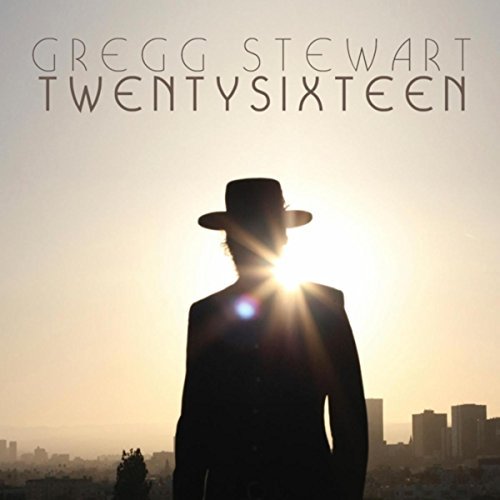
Gregg Stewart - Twenty Sixteen (2017)


Written by Raymond Burris, posted by blog admin

Fourteen songs for Gregg Stewart’s album Twenty Sixteen gives listeners an idea about how much devastation death visited on the music community in 2016. There is certainly a passing of the guard going on today as the icons of the sixties and seventies succumb to countless ailments and leave the scene. We are fortunate to have performers and writers like Gregg Stewart emerging to take their place. He gives an overview of what he loves plus a creative tribute wrapped up in one and puts some real flair on it thanks to a multi-faceted vocal performance that inhabits all of the tunes and just the right amount of artful accompaniment from a three piece backing band. Despite the tasteful quality of these tracks, however, there’s real grit and gravitas to be heard by attentive listeners. Twenty Sixteen will please fans of the respective artists, Gregg Stewart fans, and undoubtedly win new converts over with their presentation.

The key performances on Twenty Sixteen, satisfying on both a vocal and musical level, are his adaptation of Prince’s “Raspberry Beret”, his bluesy remake of Leon Russell’s “One More Love Song”, “If I Could Only Fly”, “High Flying Bird”, Guy Clark’s “Out in the Parking Lot”, the great Leonard Cohen’s “Leaving the Table”, and David Bowie’s “Starman”. The lightly dancing keyboard notes carrying the memory of “Raspberry Beret” have a sparkling delicacy that keeps the song wafting just off the ground and moving past listeners. Stewart’s album notes discuss how he hoped to turn Leon Russell’s classic “One More Love Song” into something reminiscent of The Band’s recordings from their first two albums and manages it with magically minimal effort. The countrified leanings that Stewart excels so well with reach a full flower with the track “If I Could Only Fly”, written by Blaze Foley, popularized by Merle Haggard. The tender, careful vocal treatment that he gives to Foley’s lyrics is quite reminiscent of Haggard’s own version.  It keeps a rootsy air going from beginning to end.

“High Flying Bird” from the early years of Jefferson Airplane shapes up as being on the best outings yet on Twenty Sixteen. Despite the fact original members Signe Anderson and Paul Kantner died in 2016, Stewart could have chosen to ignore the former death and, instead, cover a more recognizable track from these sixties’ stalwarts. The exuberant surge of Glenn Frey’s “I Found Somebody” survives intact into Stewart’s version and he throws himself headlong into the song with the same beaming gratitude.  He bravely takes on Leonard Cohen with the track “Leaving the Table” and puts as much of himself as he can manage into this with an equally committed musical performance. Twenty Sixteen runs a little long and could have done without a couple of otherwise fine performances, but Gregg Stewart is working in peak work throughout the entirety of this superb release.